Retro Thanksgiving Sublimation Bundle
First Impressions: Warm, Nostalgic—but Not Built for Stitching Out of the Box
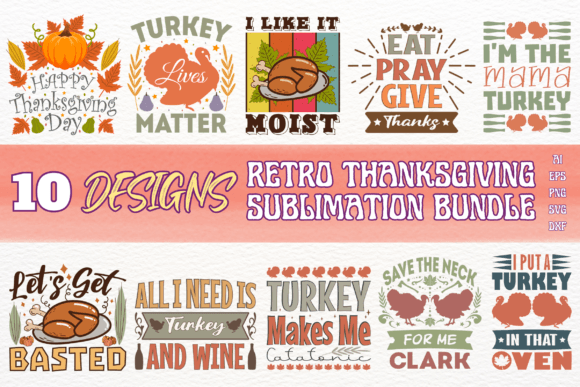
When I opened the Retro Thanksgiving Sublimation Bundle, I felt that familiar tug of vintage charm—think mid-century typography, soft earth tones, and stylized pumpkins with gentle curves. It’s clearly designed for sublimation or screen printing: clean vector outlines, balanced negative space, and a layout that reads well at 8–12 inches wide. But as an embroidery designer who’s stitched hundreds of holiday pieces for boutique clients and Etsy shops, my first thought wasn’t “love it”—it was “how much will this need to adapt?”
A Real-World Test: Embroidering This on a Linen-Cotton Kitchen Towel
Last week, I prepped a small-batch holiday line for a local kitchenware shop—linen-cotton tea towels, medium-weight, slightly textured. I chose one motif from the Retro Thanksgiving Sublimation Bundle: a circular wreath with “Give Thanks” in curved script. I resized it to fit a 4×4 hoop, digitized a simplified version (more on that in a moment), and ran a test stitch. The result? Charming—but only after adjustments. The original graphics rely heavily on fine linework and tight kerning; unaltered, those thin strokes vanished into fill stitch noise or broke apart on the towel’s weave. What worked beautifully in print didn’t translate directly to thread.
Where It Shines—and Where It Needs Your Hand
The Retro Thanksgiving Sublimation Bundle excels as a design starting point, not a plug-and-play embroidery file. Its strength lies in mood and theme—not stitch-ready construction. For custom apparel like sweatshirts or tote bags, use it as visual reference when digitizing your own machine embroidery design. Its balanced composition makes it ideal for embroidered patches, aprons, or pillow covers—especially when you reinterpret the shapes with generous satin-stitch borders and open-fill areas to let fabric breathe.
It’s less suited for baby embroidery or delicate garments. Tiny lettering, dense clusters of leaves, or narrow stems—common in retro motifs—don’t hold up on stretchy knit onesies or lightweight cotton without aggressive underlay and reduced stitch density. And on dark fabric? That subtle sepia tone in the graphic won’t guide your thread color choices—you’ll need to interpret contrast intentionally, not assume the design will “pop.”
What Craft Business Owners Should Know Before Listing
If you’re an Etsy seller or small shop owner planning to sell finished products featuring the Retro Thanksgiving Sublimation Bundle, treat it like raw design assets—not a finished product. Customers buying embroidered sweatshirts or personalized gifts expect crispness, durability, and tactile clarity. A direct sublimation-to-embroidery lift often delivers muddied edges, uneven coverage, or thread breaks—especially on textured fabrics like terry cloth or fleece.
I’ve seen this bundle used successfully on canvas tote bags (with bold, simplified digitization), rustic aprons (paired with heavy stabilizer and matte thread), and holiday gift sets (as part of a printable mockup + embroidery combo listing). But it flops on curved surfaces like caps unless you rebuild the layout entirely—and it struggles on layered garments where bulk matters.
Practical Designer Notes You Can’t Skip
- Always test on scrap fabric first—especially with your exact stabilizer, thread brand, and fabric weight.
- Review stitch density carefully. Retro graphics often imply detail, but dense fill stitch on small elements causes puckering and stiffness.
- Confirm hoop size compatibility. Many motifs in the bundle assume larger formats—resizing down for a 3×3 hoop may require redrawing key features.
- Inspect small details. Script fonts, leaf veins, and thin stems rarely survive embroidery without manual cleanup or simplification.
- Test in black and white mockups to assess contrast before choosing thread colors—what looks warm and rich on screen may read muddy in thread.
- Compare light vs. dark fabric backgrounds. This bundle’s tonal subtlety means value shifts dramatically depending on base color.
- Use proper stabilizer. Medium-cutaway works best for structured items like patches or aprons; tear-away suffices for stable woven fabrics like tea towels.
- Verify licensing. Since this is marketed as a Graphics product for POD and craft business use, confirm whether commercial embroidery rights are included—or if you need separate permission to sell stitched items.
Design Integrity Meets Real-World Wear
One thing I appreciate about the Retro Thanksgiving Sublimation Bundle is its consistency in voice—it doesn’t try to be modern, minimalist, or trendy. That authenticity helps build brand cohesion for handmade product lines focused on heritage, family, or slow-living themes. When digitized thoughtfully, it elevates a simple kitchen towel into a thoughtful holiday gift. When rushed, it reads like a printed transfer awkwardly stitched over.
Customer trust hinges on execution. A buyer ordering a personalized embroidered tote bag expects heirloom-level care—not a flattened vector dumped into embroidery software. The Retro Thanksgiving Sublimation Bundle gives you strong visual DNA; your skill determines whether that DNA expresses itself clearly in thread.
Final Thought: A Tool, Not a Shortcut
This isn’t a flaw—it’s context. As a Crafts professional who reviews dozens of digital embroidery files and Graphics bundles each season, I value honesty over hype. The Retro Thanksgiving Sublimation Bundle is a solid, cohesive set for designers who understand how to bridge the gap between print and stitch. It rewards attention, not automation. Use it to inspire, refine, and reinterpret—not to shortcut the craft. Your customers, your machine, and your reputation will thank you.