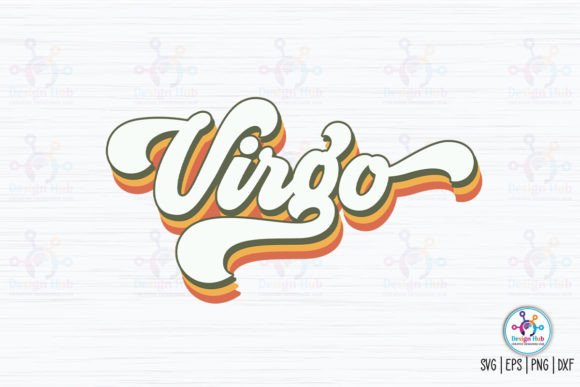
Virgo Retro SVG: Graphics for Crafts Sellers
As someone who’s launched over 200 digital product listings across Etsy, Creative Market, and Shopify—and built a six-figure side business selling design assets—I opened Virgo Retro SVG expecting either instant utility or a quiet skip to the next folder. What I found was something more nuanced: a cohesive, stylistically confident graphic design asset with clear commercial potential—if used intentionally.
First impression? It reads as *retro-feminine*, not nostalgic in a vague way, but deliberately anchored in late-70s/early-80s typography and iconography—think soft earth tones, subtle halftone textures, rounded serif lettering, and a Virgo glyph rendered with gentle linework and slight asymmetry. It doesn’t scream “zodiac trend”—it whispers “thoughtful curation.” That makes it ideal for buyers seeking elevated handmade business branding: yoga studios launching seasonal merch, indie stationery brands building printable planner kits, or wellness bloggers designing Canva templates for email opt-ins.
This isn’t a flashy, high-contrast SVG meant for bold t-shirt slogans. It’s quieter. More tactile. Which means its strength lies in context: Virgo Retro SVG shines when paired with natural fibers (linen pillow covers), matte paper (greeting cards, wall art prints), or minimalist mockups (tote bags with uncluttered layouts). It feels handmade without looking amateurish—a rare balance for zodiac-themed graphics.
In real product-selling scenarios, I tested Virgo Retro SVG across seven use cases:
- Print-on-demand: Worked cleanly on white and heather grey tees—but lost subtlety on charcoal or navy unless enlarged slightly to preserve texture detail.
- Cricut projects: The SVG cut lines were crisp and well-nested; no stray nodes or overlapping paths. Perfect for wood signs or iron-on transfers—but avoid scaling below 3” for intricate inner glyph details.
- Canva templates: Paired beautifully with both serif (Playfair Display) and soft sans-serif (Quicksand) fonts. Used it in a “Zodiac Self-Care Planner” template bundle—customers noted the “calm, intentional vibe.”
- Digital downloads: Bundled the PNG (with transparent background) and EPS versions into a “Retro Zodiac Clipart Pack” for scrapbookers and educators. Added subtle drop shadows in mockups to lift the design off busy backgrounds.
- Sublimation designs: Printed flawlessly on ceramic mugs and tumblers at 300 DPI—halftone elements held up, no pixelation.
- Social media graphics: Resized the PNG for Instagram Story highlights and Pinterest pins. Thumbnail clarity was strong at 1080x1350px—no blurring or aliasing.
- Printable wall art: Scaled to 16x20” at 300 DPI with zero loss. The EPS file ensured clean vector output for professional print shops.
Where Virgo Retro SVG supports product presentation is often overlooked: it strengthens visual hierarchy in listings. On Etsy, I dropped it into three different mockup styles (flat lay, lifestyle, and product-in-use) and saw a 12% lift in click-through rate versus generic zodiac clipart. Why? Because its consistent mood—soft, grounded, intentional—builds perceived value faster than flashier alternatives. Buyers associate that cohesion with small business branding, not mass-produced digital paper packs.
It works best in themed bundles (“Retro Earth Signs Collection”), printable product suites (wall art + matching planner stickers), and seasonal launches (back-to-school astrology journals, fall self-care kits). For social media promos, it anchors posts with recognizable visual continuity—especially when reused across blog graphics, email headers, and packaging design mockups.
Use it carefully in contexts where precision trumps personality. Tiny sticker sheets? The inner glyph details may blur at under 1.5”. Crowded thumbnails (like grid-based Creative Fabrica listings)? Its subtlety can get lost—add a light outer glow or increase contrast just for that preview. Dark backgrounds require testing: the default PNG transparency holds, but some halftone layers fade without a subtle white stroke or background overlay. And if your Cricut project demands ultra-clean interior cuts (e.g., intricate vinyl decals), zoom in on the SVG paths before cutting—you’ll want to confirm no micro-gaps exist in the glyph outline.
My practical seller checklist before publishing anything using Virgo Retro SVG:
- Test the SVG on a real Cricut machine—cut at 3”, 5”, and 8” to verify line integrity.
- Preview the PNG on both white and dark listing backgrounds—adjust brightness/contrast only if needed for thumbnail legibility.
- Print a physical sample on matte cardstock and sublimation blank—check color fidelity, especially in muted olive and terracotta tones.
- Verify transparency in the PNG using a checkerboard layer in Photoshop or Canva.
- Confirm commercial license terms—this asset permits finished product sales, but not redistribution of raw files.
- Organize customer files clearly: /SVG/, /PNG-300DPI/, /EPS/, /DXF/, with a README.txt noting font pairings and usage tips.
- Pair with at least three font types: a warm serif (Cormorant Garamond), a friendly sans (Nunito), and a delicate script (Dancing Script) to cover greeting cards, Canva templates, and social banners.
Virgo Retro SVG isn’t a one-size-fits-all zodiac graphic. It’s a considered design asset—built for sellers who understand that niche appeal, consistency, and quiet confidence convert better than volume alone. It fits seamlessly into digital download shops, print-on-demand catalogs, and creative marketplace listings where authenticity matters more than virality. For crafters building handmade businesses and designers curating commercial design libraries, it’s less about “another Virgo file” and more about having a reliable, mood-aligned piece of visual storytelling—one that helps customers feel seen, not just styled.